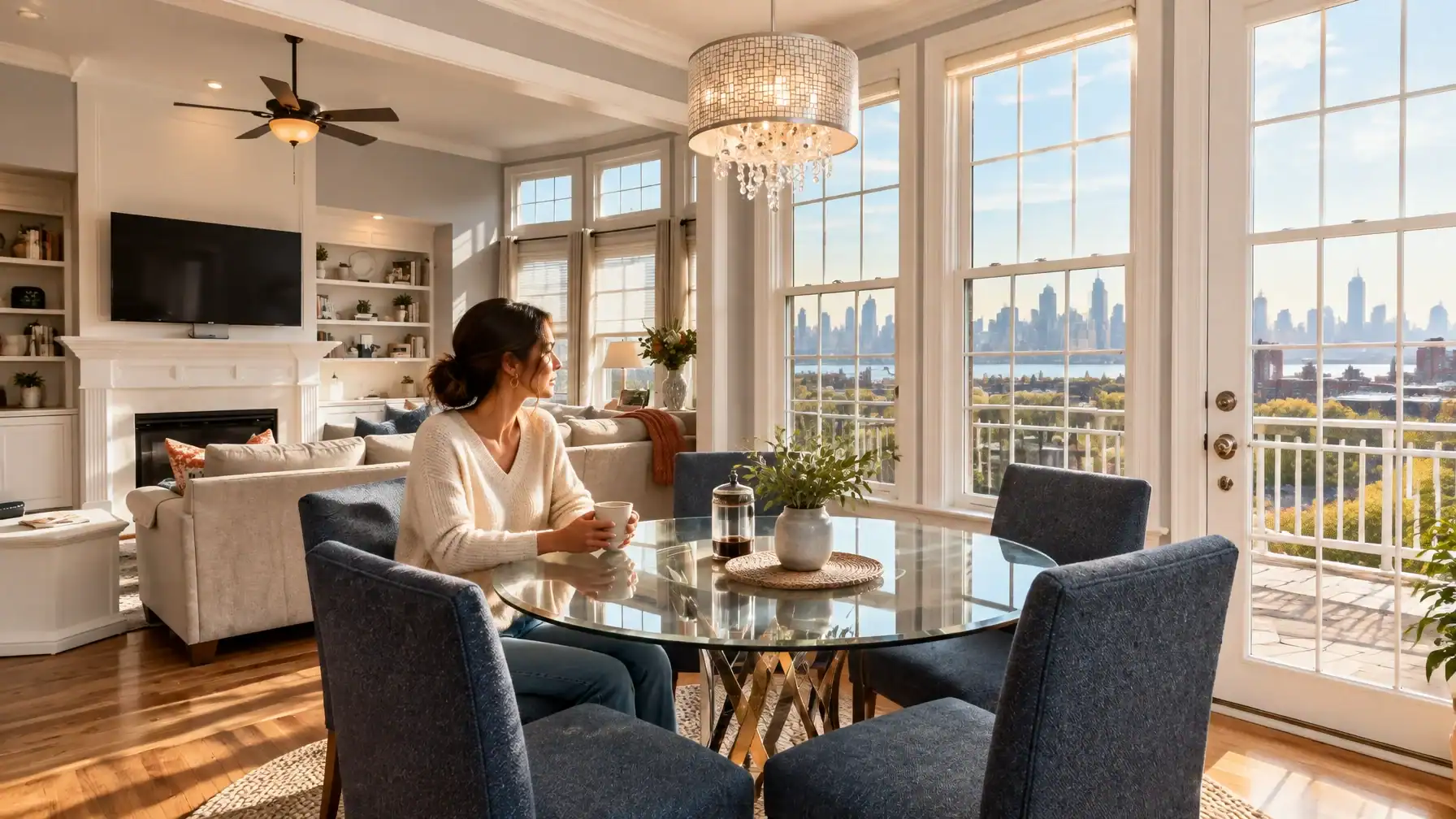
Illustrative residential image; not a photograph of The Orchard.
The Orchard, a 70-story, 824-residence tower in Long Island City, has signed its first three retail tenants. Together, they have leased 7,468 square feet, just over half of the building’s roughly 14,000 square feet of planned retail space.
The news comes as more than 90% of the residences are leased, nine months after the building launched. That is a notable milestone, but the retail news has its own significance: what sits on the ground floor can shape the experience of living in a large rental building, and offer clues about how its neighborhood is developing.
What’s coming to The Orchard?
The first tenants are:
- Intuit: 3,546 square feet, with an expected opening in December 2026.
- Tokimo: 2,251 square feet, expected to open by spring 2027.
- Mollytea: 1,671 square feet, expected to open in the second quarter of 2027.
The leases were reported by Commercial Observer and announced in a press release. The mix includes a financial technology company, a Korean beauty supplier and a Japanese tea and beverage brand. They’re different kinds of businesses, so it’s worth checking what each location will offer before assuming every space means an everyday service or shop for residents.

Ground-floor retail can add nearby options, but check what services and hours each tenant will actually offer.
Why ground-floor retail matters to residents
When retail is open and accessible, it can make daily errands simpler. A resident might be able to pick up a drink, browse beauty products or meet a neighbor without traveling far. That convenience can be especially helpful during a busy week or in bad weather.
The right mix may also make a building feel more connected to the neighborhood. Retail that serves both residents and nearby visitors can bring activity to the street throughout the day. But the tenant list matters: a beverage shop and a beauty retailer have different uses from a business that primarily serves customers online or from another location.
For renters comparing apartments for rent in Queens, treat a retail lineup as one part of the decision, not a substitute for checking the apartment, building amenities, commute, lease terms and nearby businesses.
Does retail mean rents will rise?
Not automatically. Ground-floor tenants can make a building more appealing, but a retail lease does not guarantee that apartment rents will increase. Rent levels depend on many factors, including housing supply, demand, location, apartment features and the terms a landlord offers.
For context, RentCafe’s October 2026 Long Island City rental data puts the average rent at $4,795, up 1.71% year over year, and reports a $4,744 average for Hunters Point. One-bedrooms at The Orchard currently start at $5,360 a month, about $565 above that broader LIC average. These figures aren’t a direct like-for-like comparison: averages vary by neighborhood boundary, apartment size and building type.
Retail may add convenience or appeal for some renters, but compare the full cost and features of apartments rather than assuming a store downstairs justifies a higher rent.
Reading retail as a neighborhood signal
A building’s retail leasing can offer a useful, limited signal: businesses have decided there may be enough potential customers to commit to a space. That can reflect confidence in the building’s residents and the surrounding area.
Still, signed leases are not the same as open businesses. Intuit is expected to open first, while Tokimo and Mollytea have later target dates. Ask whether a tenant is already operating, when it expects to open and what it plans to offer. Also look at businesses beyond the building: a handful of tenants in one development can’t tell you whether the wider neighborhood has the shops and services you need.

Consider the wider neighborhood, too, not just the tenant list inside one development.
If the retail space is still vacant, ask these questions
For renters, a vacant storefront may simply mean a business has not yet signed or opened. Ask the leasing team what is planned and whether construction or deliveries could affect access, noise or your move-in experience.
For buyers, especially in a condo or co-op, dig further. Ask how commercial spaces are owned and managed, who pays for their upkeep, and whether commercial revenue affects the building budget or common charges. Review the governing and offering documents with the appropriate professionals. Confirm which spaces are leased, what restrictions apply to future tenants, and how loading, waste, noise and operating hours will be handled.
A well-planned retail space can be an asset; a vacant one is not automatically a problem. The key is understanding the costs, responsibilities and realistic plans, not relying on a leasing announcement alone.

Look at the apartment and the building’s practical details alongside its retail plans.
The Orchard’s first retail deals show how a large LIC building can begin to build a street-level offering while its residences fill. For renters and buyers, the practical takeaway is simple: check what is actually opening, how it fits your routine, and what it means for the building’s finances and operations.
If you’re comparing apartments for rent in Queens or considering a purchase in Long Island City, Armas Group NYC can help you weigh your options. As a local queens real estate agency serving LIC and the surrounding area, our team offers personalized guidance for renters and buyers.